- Employer
- Year
- Role
- Tools/Skills
Challenge
A solution was needed quickly due to the high cost associated with physical labor, as well as the opportunity cost of having lines shut down. A vender was contacted to quote the project. Their solution was a small automation cell that would cost only $45,000, but would take five months to create. Unable to wait that long, the project was pursued internally with a deadline of just seven weeks.
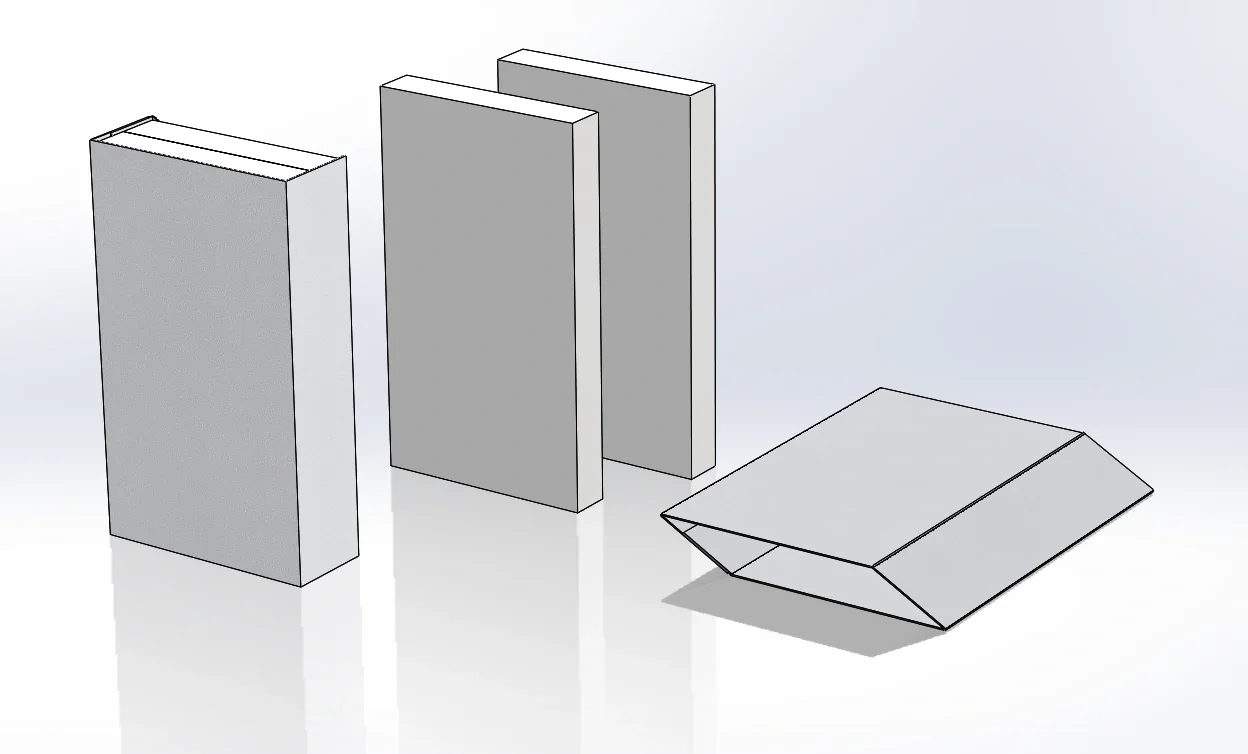
This assembly operation is simple but delicate, and testing determined that the Sleeves, which come flat-packed and need to be opened up, would present the biggest challenge. Experiments showed a large variation in the amount of force needed to open the Sleeves, and some Sleeves arrived from the supplier warped. Both of these issues caused them to buckle in the wrong direction when opening force was applied.
Solution
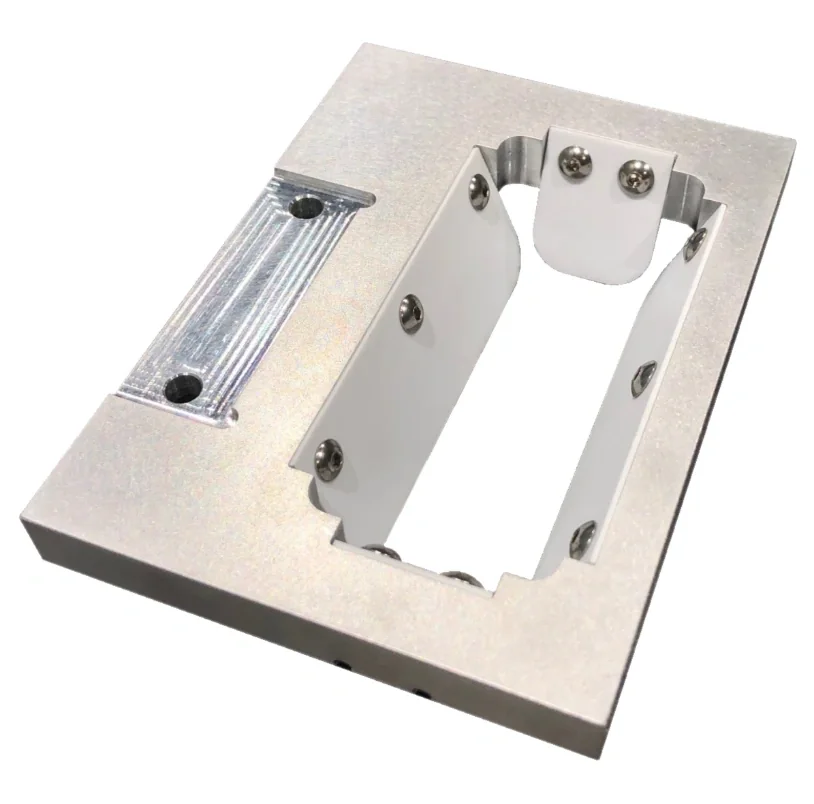
An automation cell was devised that performed the same duties as the operators assigned to the station. Due to the need for rapid implementation, the decision was made to forgo high-tech vision inspection systems or other quality verifications because the assembly line was designed to catch most defects at later points. This allowed the project to go from recognition of the need to a functioning machine within just 7 weeks.
First generation
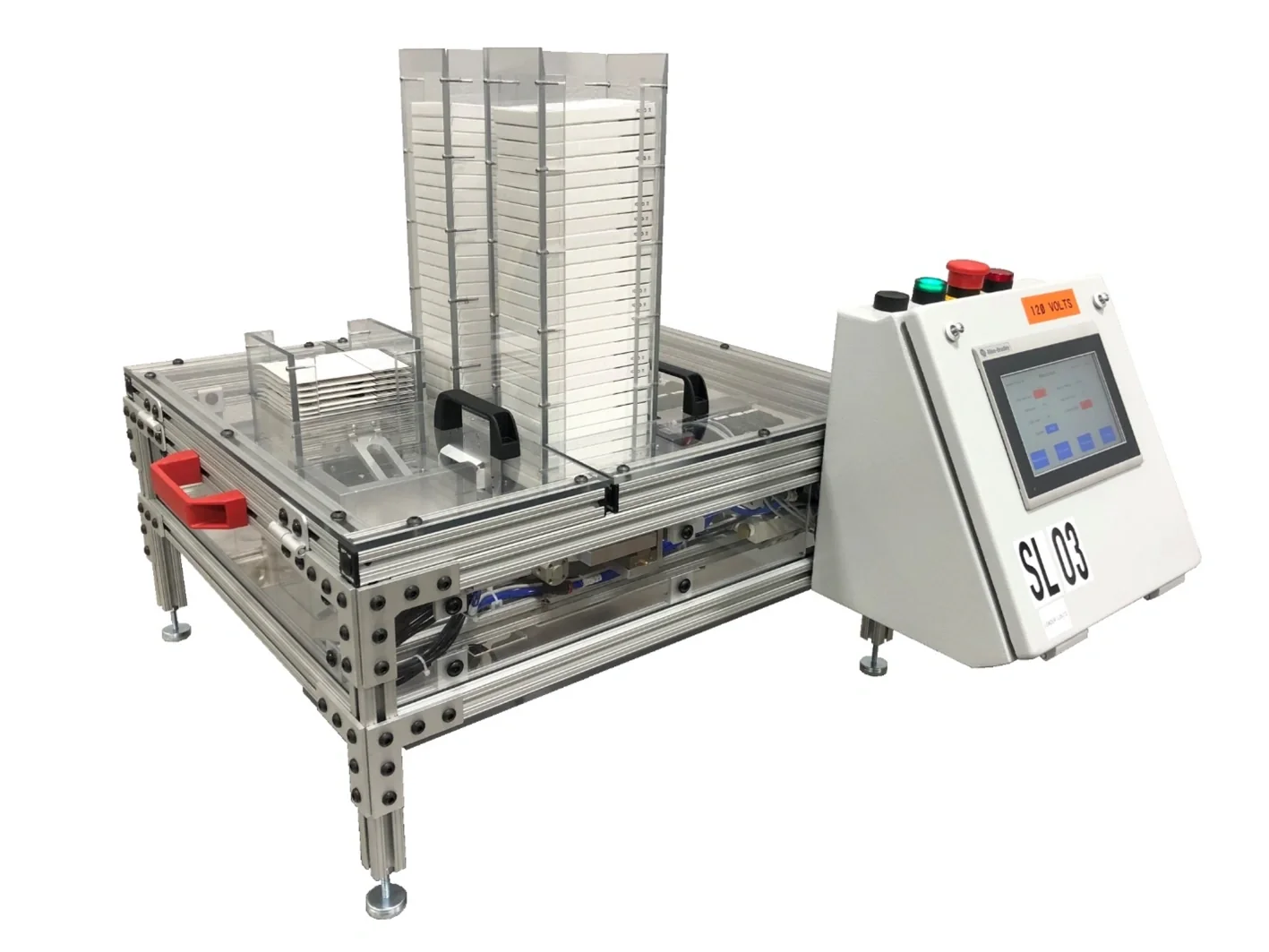
The first generation of the Sleeve Packing Automation assembled Starter Bundles in approximately two seconds and required only two operators, nearly doubling their effective output. The machine functioned by first stacking the Device and Consumable onto each other, then erecting a flattened Sleeve by squeezing it from the ends. A funnel would be inserted into the open Sleeve, then the Device and Consumable would be pushed through the funnel and into the Sleeve. Lastly, the assembled Starter Bundle would fall through a chute and onto a table-mounted conveyor belt below. The machine’s footprint measured only 20” x 24” and it sat easily on a tabletop.
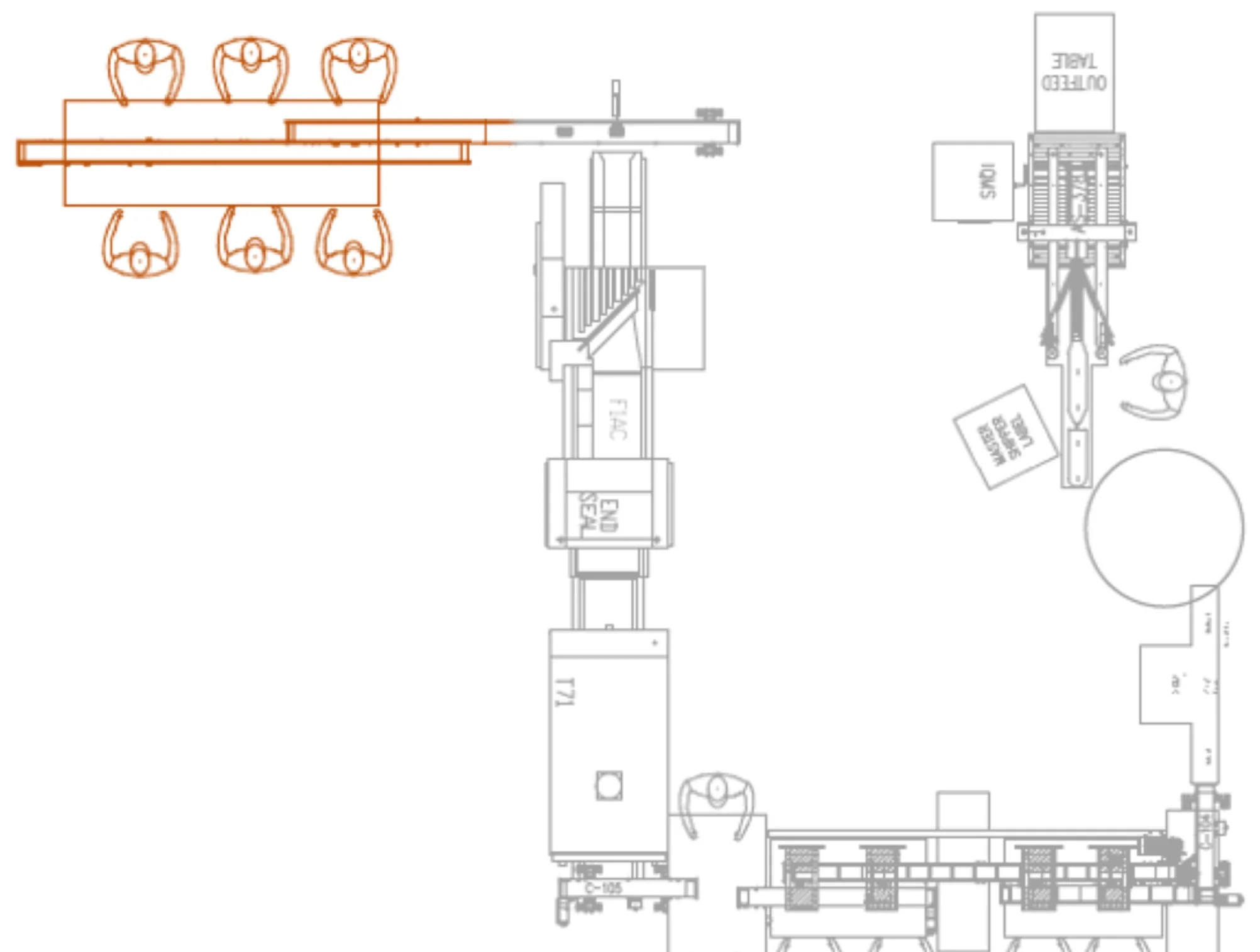
When running smoothly, the Sleeve Packing Automation allowed two of the six operators at the station to idle. Unfortunately, the machine suffered from somewhat poor reliability. Six positions were still staffed at the station to maintain rate when the machine went down, preventing full cost savings from being realized. Despite this, the first generation served four months in production and was partially responsible for a gradual OEE increase on the line as a whole.
Second generation
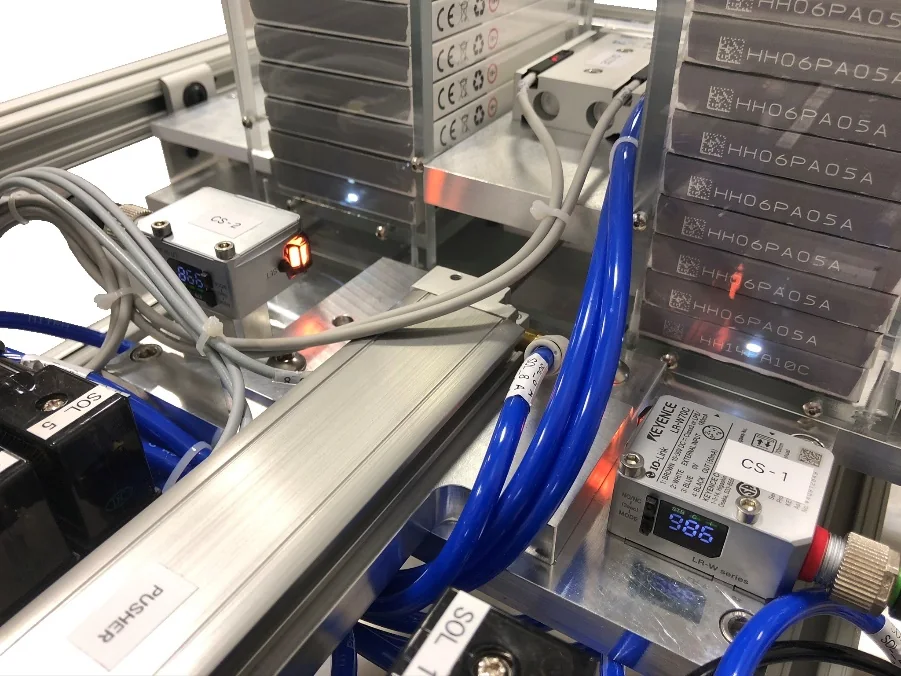
A plethora of changes were implemented in the second generation of the Sleeve Packing Automation, but three changes were responsible for the most dramatic increase in reliability. First, the suction cup responsible for grabbing the Sleeves was placed on a rocker-cam mechanism. It rode against a profile that forced it upwards when grabbing a Sleeve, resulting in a much more consistent grip and less wear on the cup itself. Second, the hook that opened the Sleeve was made of robust aluminum rather than the sheet metal of the first generation, which made the Sleeve opening motion more predictable and easier to adjust. Lastly, an additional air outlet was used to provide a “puff” that helped prop the Sleeve open before the hook fully opened it.
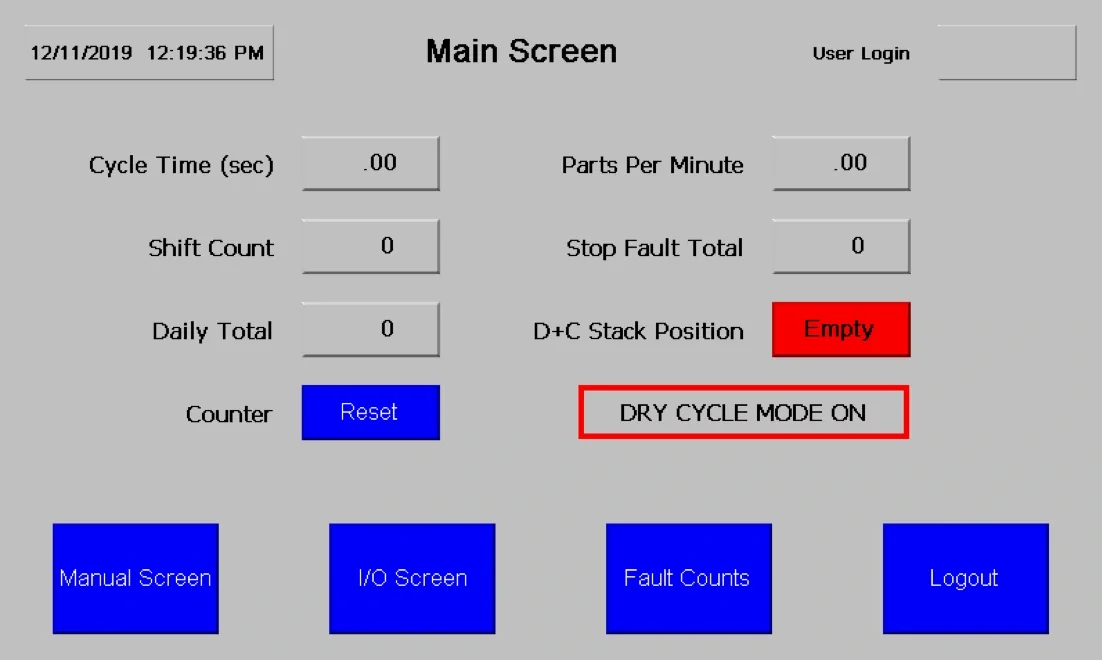
All of these changes resulted in a massive increase in reliability. In addition to this, optimizing the mechanical motions granted a further 20% speed increase and reduced the machine’s noise. An HMI was also added to provide more functionality, different modes of operation, production statistics, and detailed error messages.
Validation
Two of the second-generation Sleeve Packing Automation machines were built. The customer was in the process of attaining an FDA regulated status during this time, so the machines were validated as optional accessory equipment to the Starter Bundle lines.
The validation consisted of IQ/OQ, and two PQ runs of minimum 2 hours and minimum 2,800 assembled Starter Bundles. PQ1 concluded in 2 hours and 54 minutes with an Overall Equipment Effectiveness (OEE) of 60%. A loose component was discovered to be causing Sleeves to jam and drastically reducing the OEE. When the problem was discovered, the fix took thirteen minutes, causing a further 12% OEE loss. There were no other issues during PQ1. PQ2 was far more successful, taking only 2 hours and 9 minutes and achieving an exceptional OEE of 87%.